Comb
Eighteen per cent, and not before
A capping is a statement about water content. Until the honey in a cell is below about 18 % water the bees leave it open and keep working on it, which is why a half-capped super is not a half-finished one — it is a finished half.
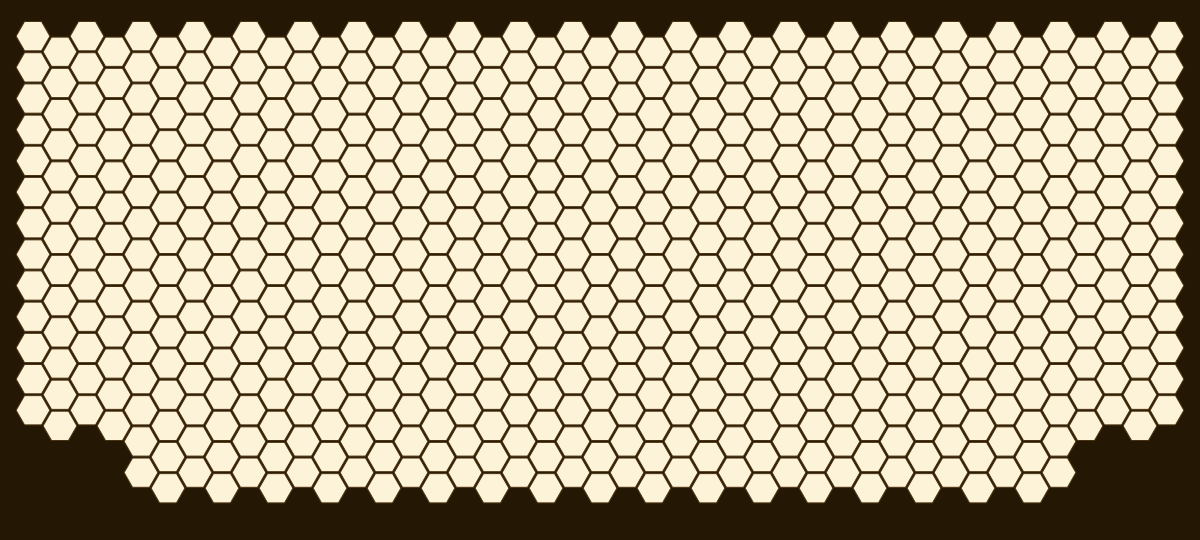
629 cells, each drying at the rate the air over it allows. Read down and the frame ripens.
Why it spreads rather than sweeps
Nectar comes in at around 70 % water. The colony drives it down by fanning, and fanning is not even across a frame — the air moves best along the top bar and down the middle of the face, and hardly at all in the bottom corners. Every cell therefore dries at its own rate, crosses 18 % at its own moment, and is sealed at its own moment.
Nothing about that is a wave. The pattern you see is the shape of the airflow made visible, and it is why the last cells to be sealed on a real frame are the two bottom corners.
What we do with it
Supers come off when they are about nine-tenths sealed. What is left open is tested on a refractometer and either goes back on the hive or comes off separately; nothing above 19 % is jarred, because honey above about 20 % ferments.
Cappings are cut off, drained for two days and rendered into wax. The wax is sold as blocks at the shop; it is not scented and it is not bleached.
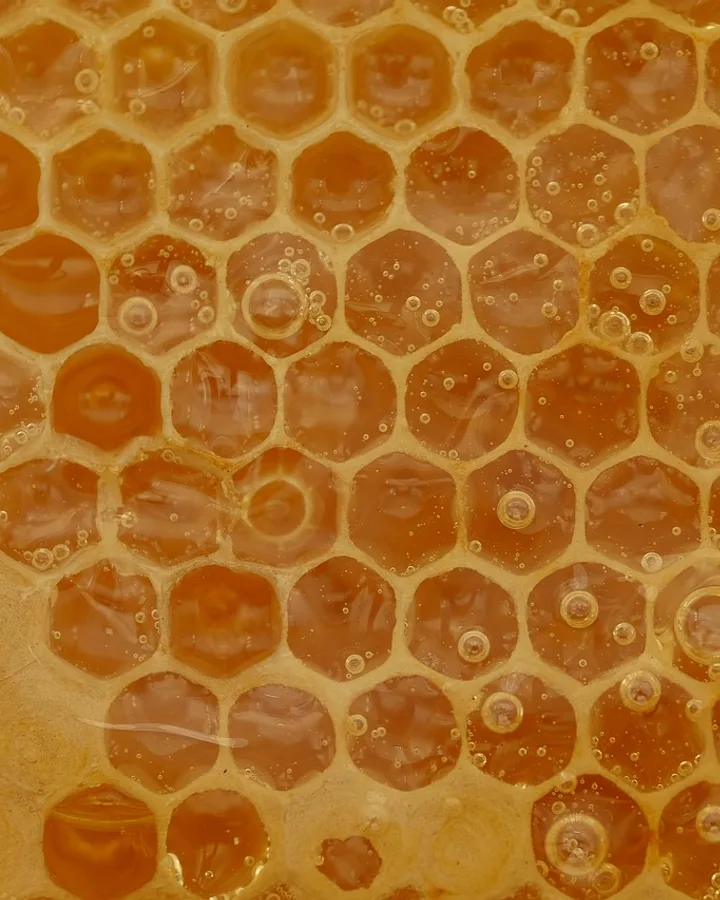
Cut comb
Comb built on unwired foundation and cut out in squares, cappings intact. The wax is edible and the honey has never been through a pump, a strainer or a tank.
220 g box £8.50 case of six £45
Two frames that never get sealed
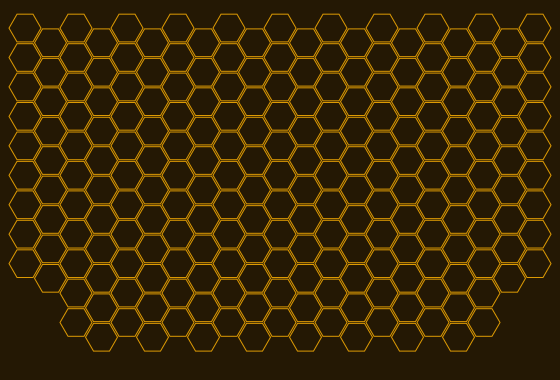
Nothing coming in
Comb drawn, colony strong, no forage. Nothing arrives, so nothing ripens and nothing is sealed — 0 of 223 cells. A July dearth looks exactly like this and it worries new beekeepers every year.
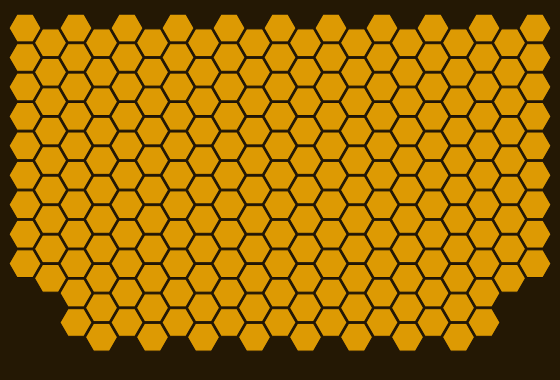
A wet fortnight
A flow on and every cell filled — 223 of 223 — but the air is saturated and the water content lands at 22 % and stops. Not one cell is sealed, and that honey must not be jarred.
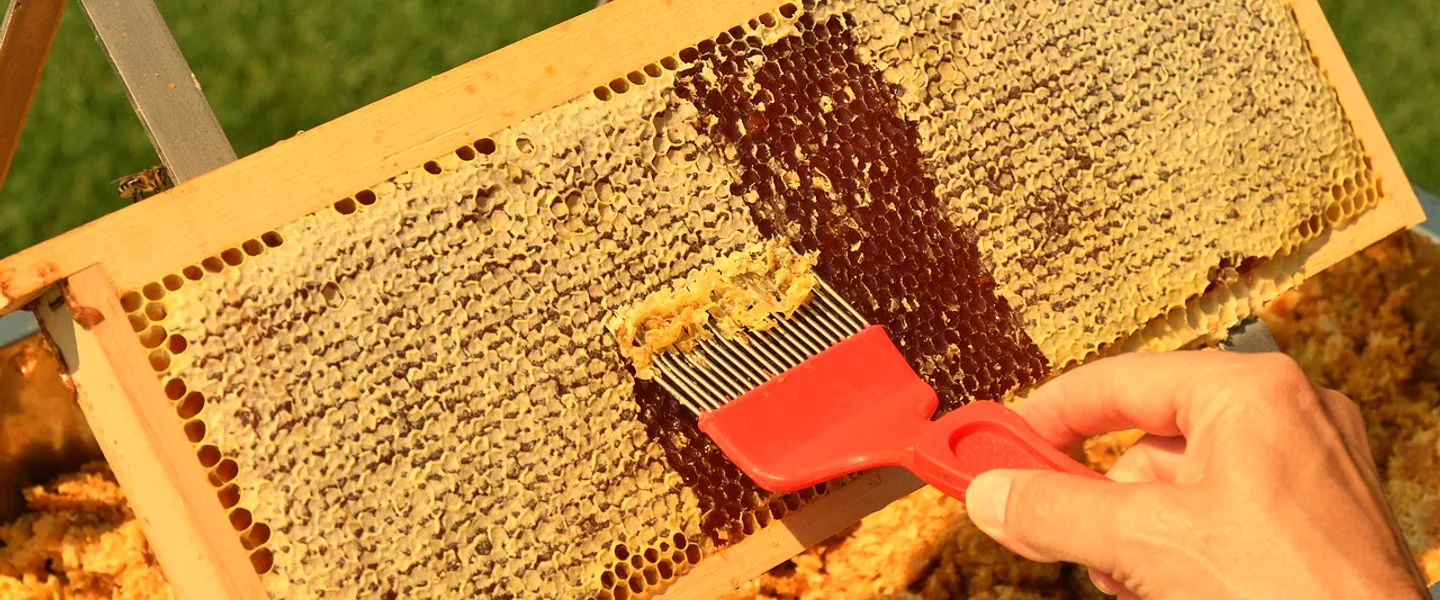
Cut comb, cut to order
500 g raw ling heather honey £11 · case of six £58 · UK post £4.80 a box