Journal · From the honey house · 4 min
Why heather honey is pressed, not spun
Ling heather honey sets to a jelly inside the comb. Here is what that means for the colonies, the honey house and the price on the jar.

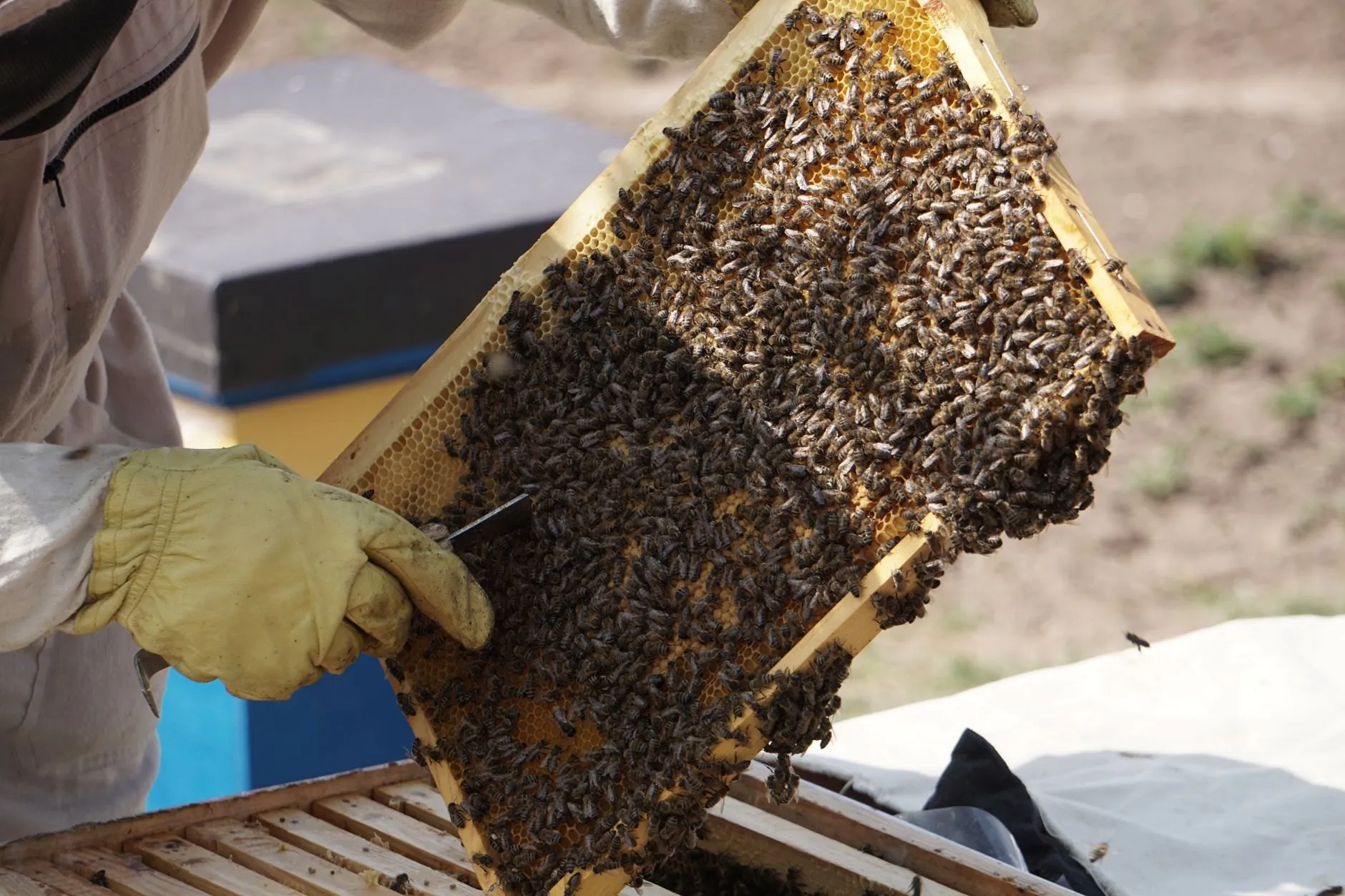
Most honey comes out of the comb in a spinner. You slice the wax cappings off, drop the frames into a drum, and centrifugal force throws the honey out against the walls. Ling heather honey will not do that.
A honey that behaves like a jelly
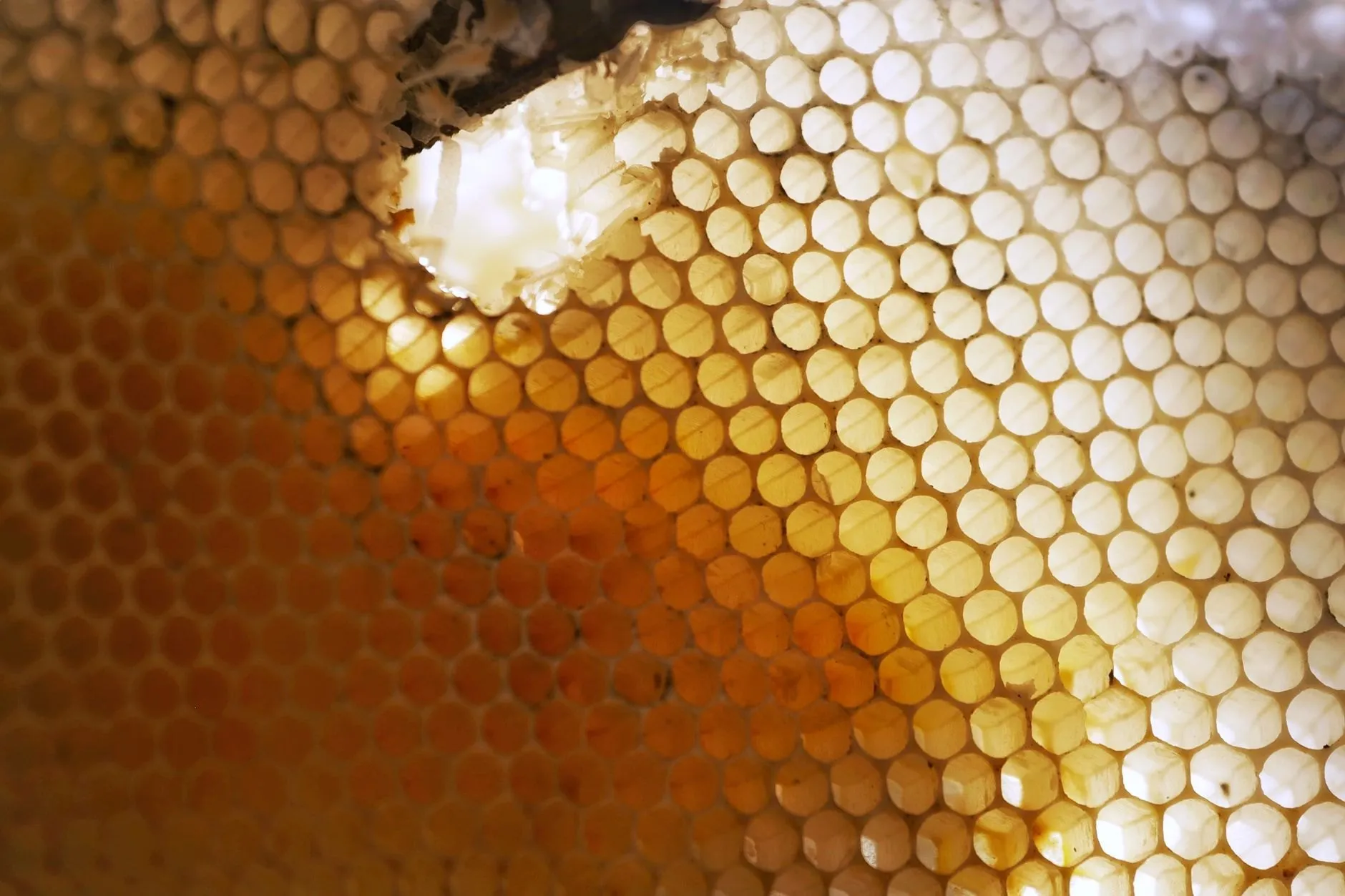
Heather honey is thixotropic: left still, it sets to a soft gel; stirred, it loosens for a moment and then sets again. In the comb it sits like a jelly in every cell. Spin it and almost nothing comes out.
So we press it. Every frame from Keld Top is cut out of its wooden frame, broken up and squeezed in a cold press. It is slow, it destroys the comb the bees built, and a good day in the honey house fills about sixty jars.
Why the jar is 500 g
Pressing loses more than spinning, and the bees have to rebuild their comb the next year, which costs them honey. That is why a jar of heather is 500 g and £11 when our wildflower is a full pound and £8.50.
How to keep it
Leave it in a cool, dark cupboard and do not warm it above 40 °C, or the smell goes. The fine bubbles you can see are meant to be there. If it looks cloudy with air, it is right.
Browse the season’s honey or read about the six apiaries.